

Remy’s Story
The Beginning
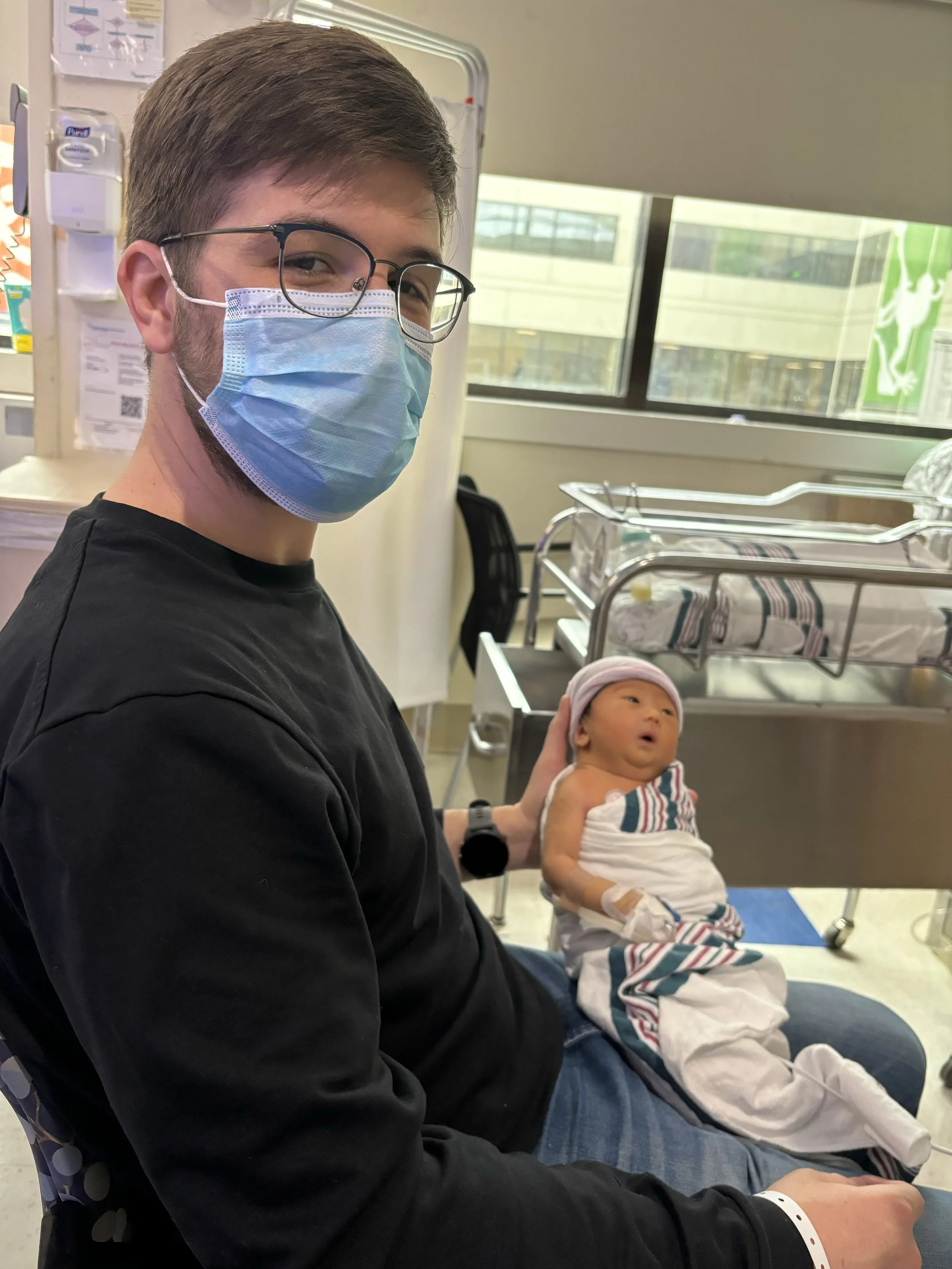
Remy in the NICU
After a harrowing delivery, Lizz and Bobby welcomed their son Remy into the world in spring of 2024.
Remy was the cherished first child of careful parents who took all prenatal precautions and opted for extensive screening tests.
Though the pregnancy was unremarkable, the complications of Lizz’s delivery launched parenthood on a high-stress tone that never seemed to dissipate. Within Remy’s first week, he suffered a hypothermia episode at home that required ER admission, a lumbar puncture, and a weeklong NICU stay.
By the age of 2 months, Remy was already showing signs of something being wrong. Remy had severe global developmental delays and lacked head control, a social smile, and age-appropriate tracking and crying. He continued to struggle with feeding, and specialists diagnosed him with hypotonia, a cleft palate, trichomegaly, and even cerebral palsy.
There were also the small, anecdotal differences that Lizz noticed – from the way Remy’s gaze on his surroundings seemed different from other babies’ to his tapered fingers to his unusually high pain tolerance and lack of body spatial awareness. Hints of trouble were mounting, but the parents never suspected a genetic condition due to its rarity and the extensive prenatal screening they had done.
Diagnosis
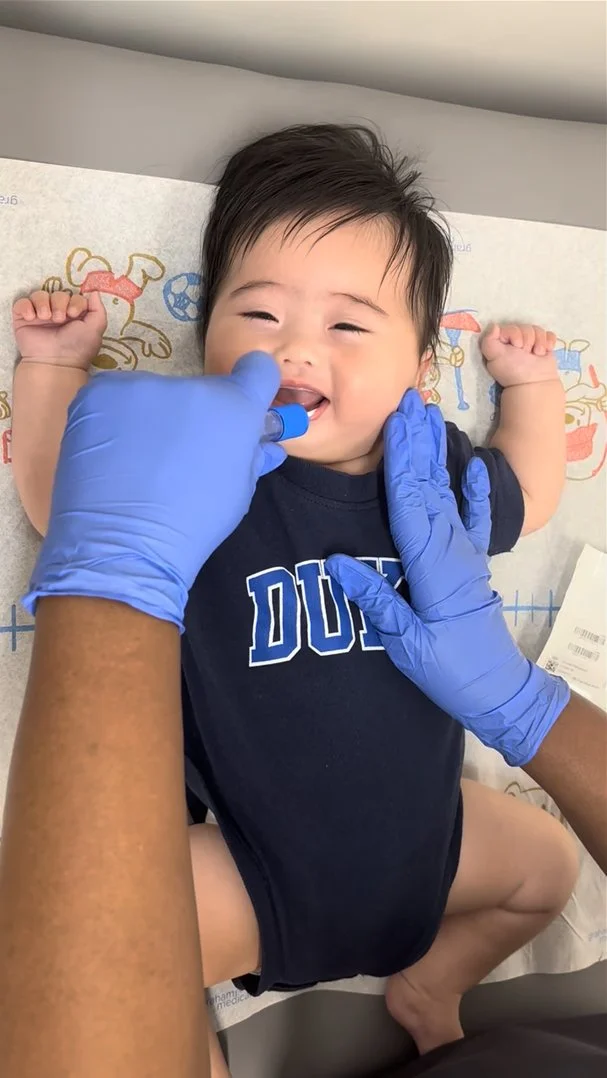
Remy being swabbed for genetic testing
At the pediatrician’s guidance, Lizz and Bobby placed Remy on a year-long waitlist to be seen by the local geneticist, but pushed to have him tested by 4 months old. Remy was swabbed for a neuromuscular genetic panel and Whole Genome Sequencing (WGS), a diagnostic genetic test.
Though Remy was tested so young, the shortage of geneticists meant that his parents did not receive his test results until he was 8 months old. On that fateful day, Remy’s local geneticist finally shared the news: Remy had a pathogenic gene mutation.
It was not inherited from either parent. The DHX30 mutation had spontaneously and surreptitiously occurred in early pregnancy and now spelled a very different future than anyone could have imagined.
To compound matters, the local geneticist had no information or resources on-hand due to the ultra-rare nature of the condition. Devastated, the parents felt the diagnosis left them with more questions than answers and departed in confusion.
Our Remy
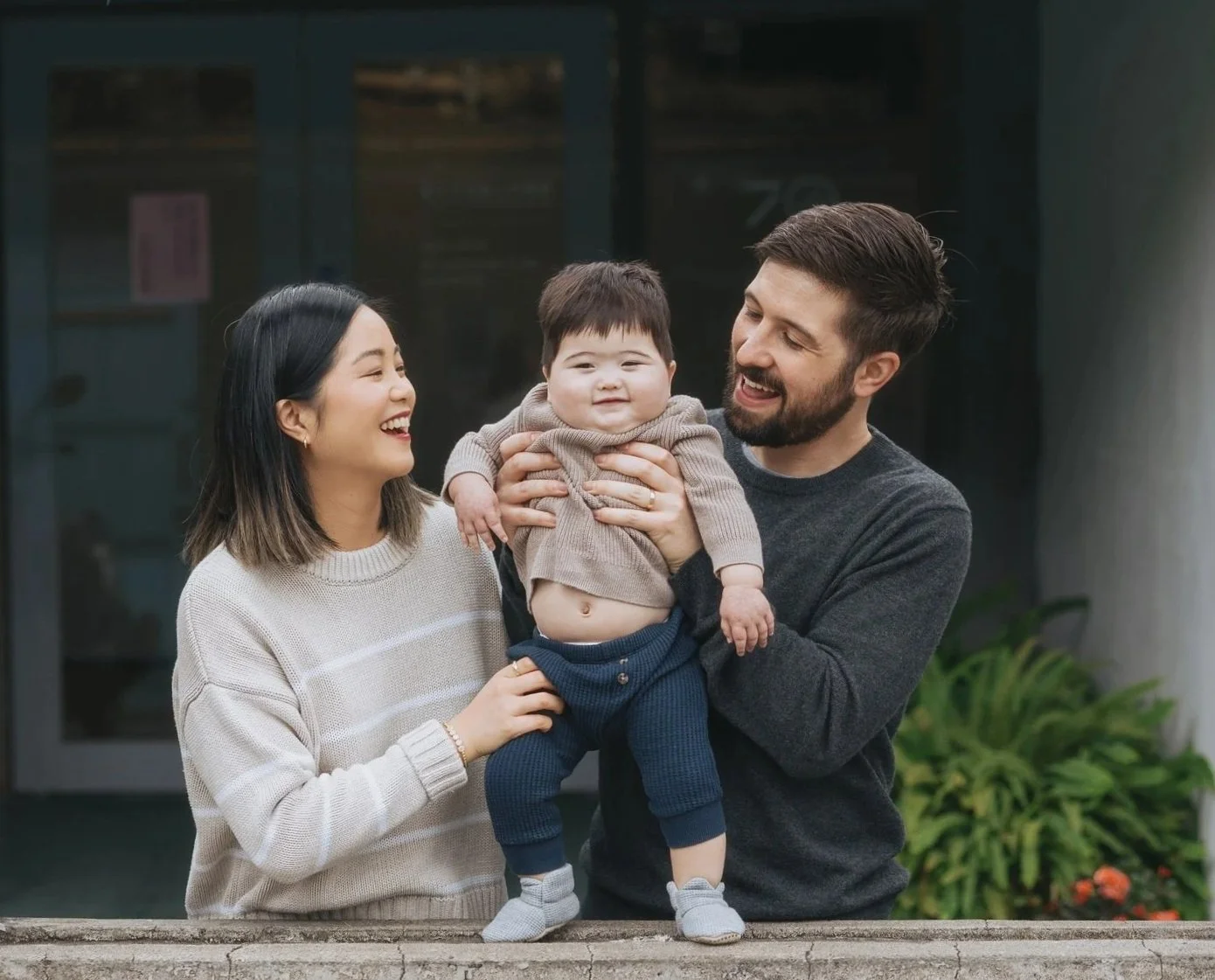
Remy enjoying his first trip to Taiwan
These days, even with all the adversity he faces, Remy is a happy, sweet boy that loves having your attention. At age 2, he has the physical capabilities of an 8-month-old, and cognitive tests show him at <1st percentile of other children his age. He is blissfully unaware of his differences and that having a dozen therapies per week across traditional PT, DMI, OT, Speech, Eating, and Special Instruction are not your typical childhood.
Remy is universally beloved by his therapists and works hard at his sessions; however, he still tries to cuddle his way out of working with a coy smile on his face. His big, sparkly laugh is never far off, especially if his mom or dad dance into the room after being away. He always looks forward to his next snack with gusto. He has an interest in people (especially the ladies!), which continues to win over fans in doctor’s offices everywhere.
Remy is not what Lizz and Bobby pictured parenting would be like, but he joyfully reminds us that difference deserves to be recognized, cherished, and celebrated.
Turning Grief into Motion
For many rare disease parents, diagnosis is often accompanied by grief, as Lizz has shared at the Grieve Leave movement. However, one thing has always been certain for all rare disease parents: come hell or high water, nothing will stop them from trying to improve their children’s lives.
Lizz and Bobby are determined to advance DHX30 research, but also to make a lasting difference for every life touched by it. Remy continues to inspire that mission. His story has already made a profound impact on so many, and he’s the reason they keep going.

Remy, Lizz, and Bobby